What Does The Body Do In The Blue?
2026 - Developed during the artist in residency program at House Conspiracy.
Meditation 2026, performance, video and sound, 00:04:05, dimensions variable
The video work Meditation features a body crawling into a corner of the room trying
to find peace of mind, safety and to stabilise emotions. It is reflecting on the personal
experience of depersonalisation. Depersonalisation is common for a traumatised person to experience during traumatic events.
See full video, please request via : devidsamol@gmail.com
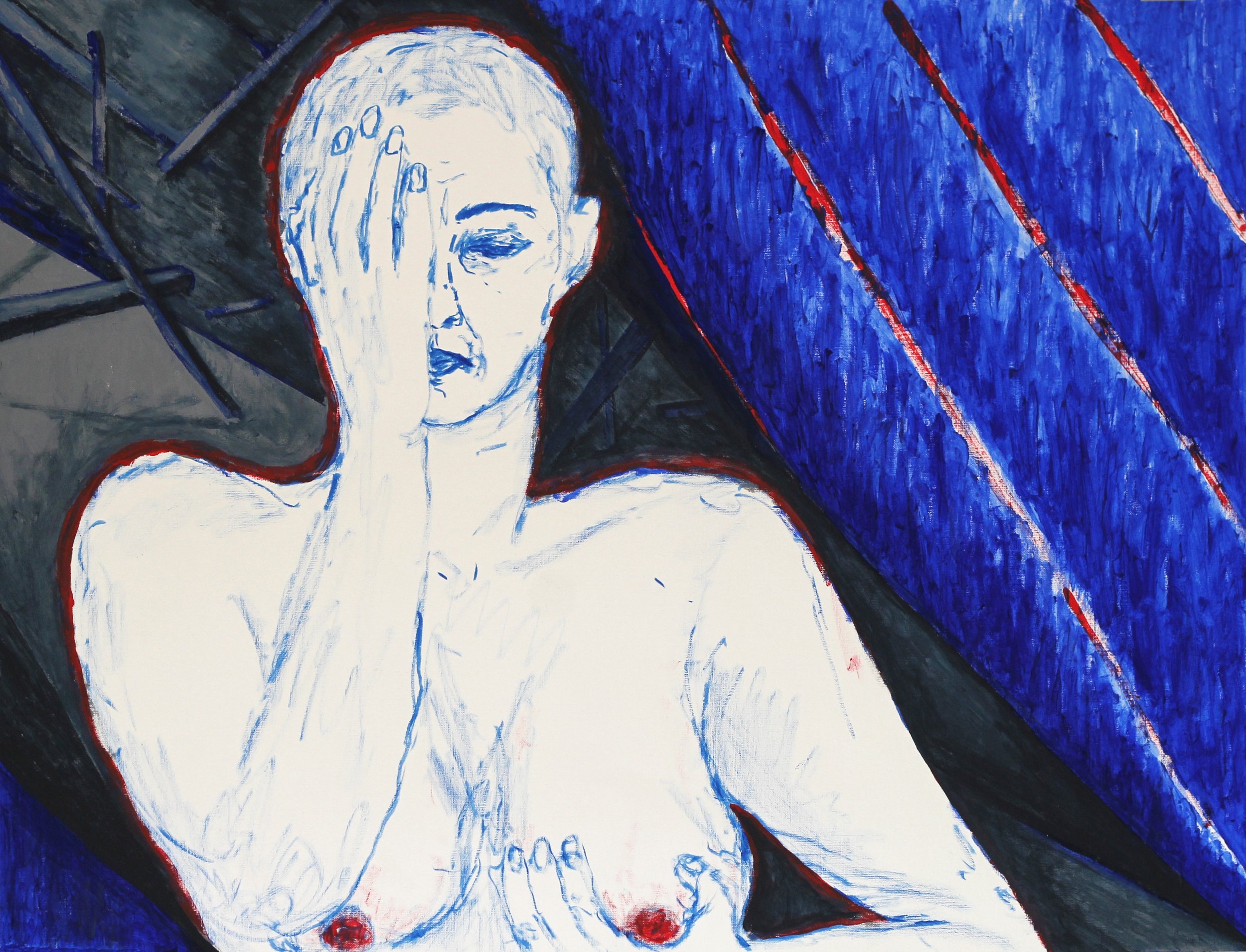
I miss my children; 2026, Acrylic and ink on oil paper, 50x65cm
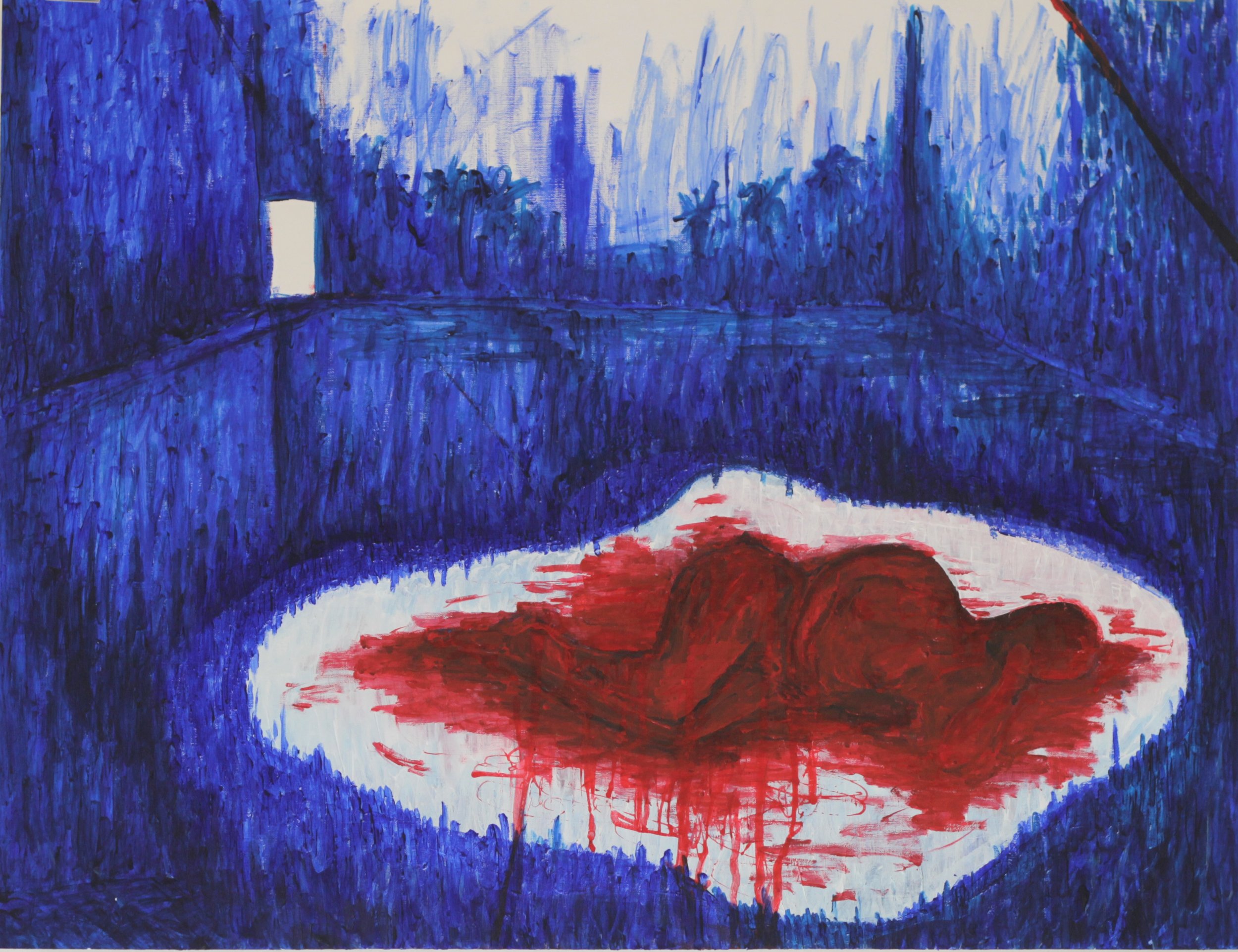
I'm one of you, you're one of us; 2026, Acrylic and ink on oil paper, 50x65cm
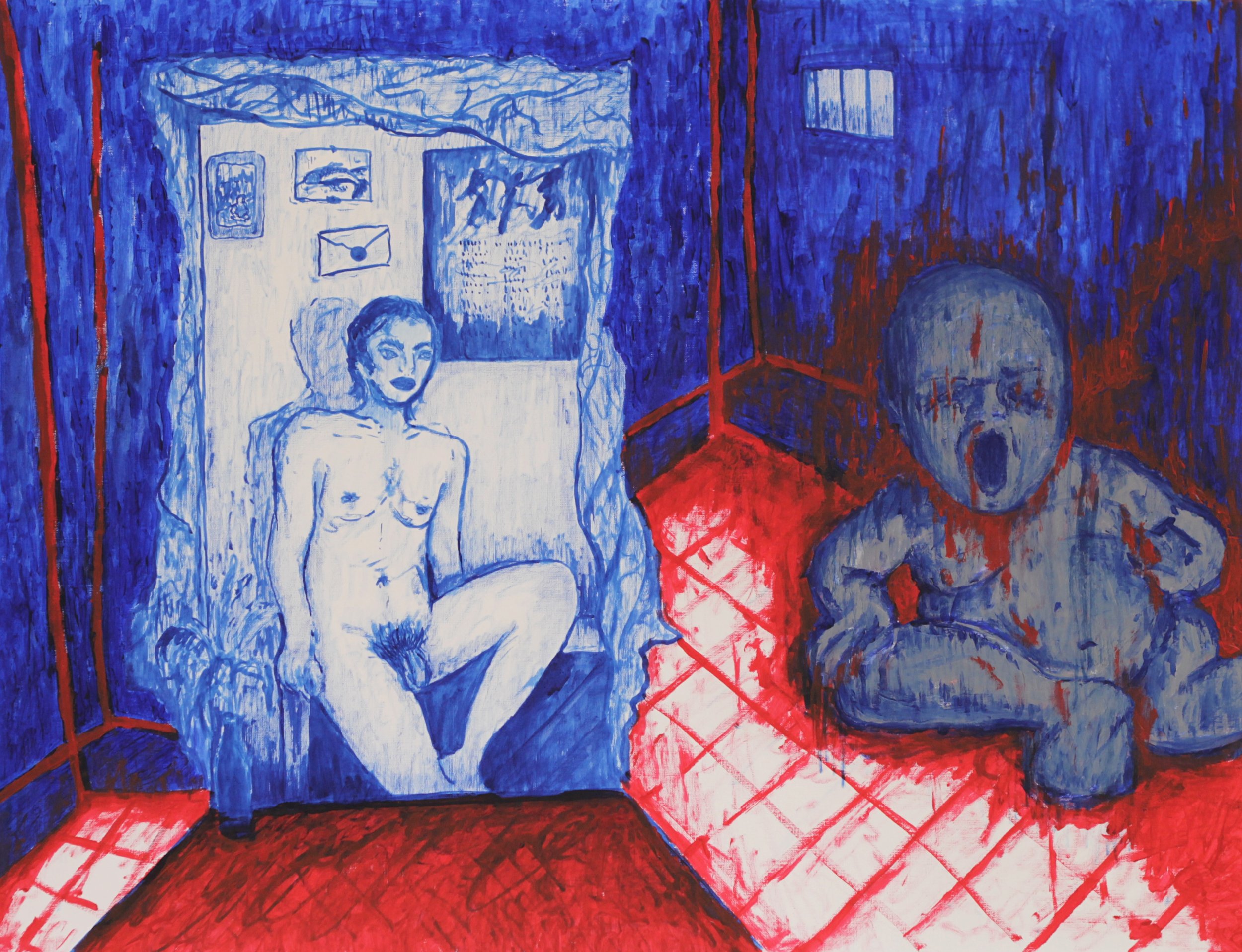
Self-portrait: Retrospective In the Blue; 2026, Acrylic and ink on oil paper, 50x65cm
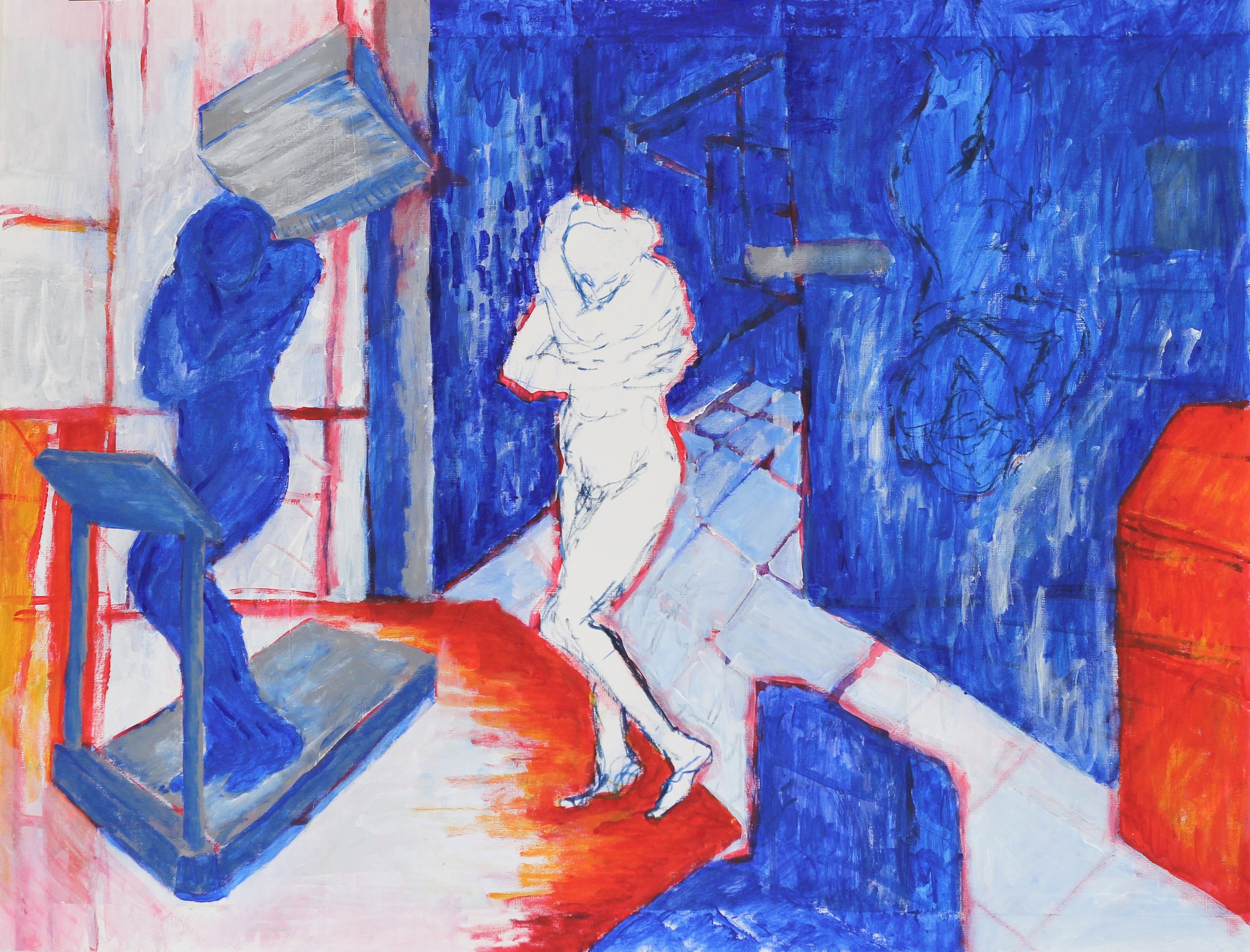
Wall Of Shame; 2026, Acrylic and ink on oil paper, 50x65cm
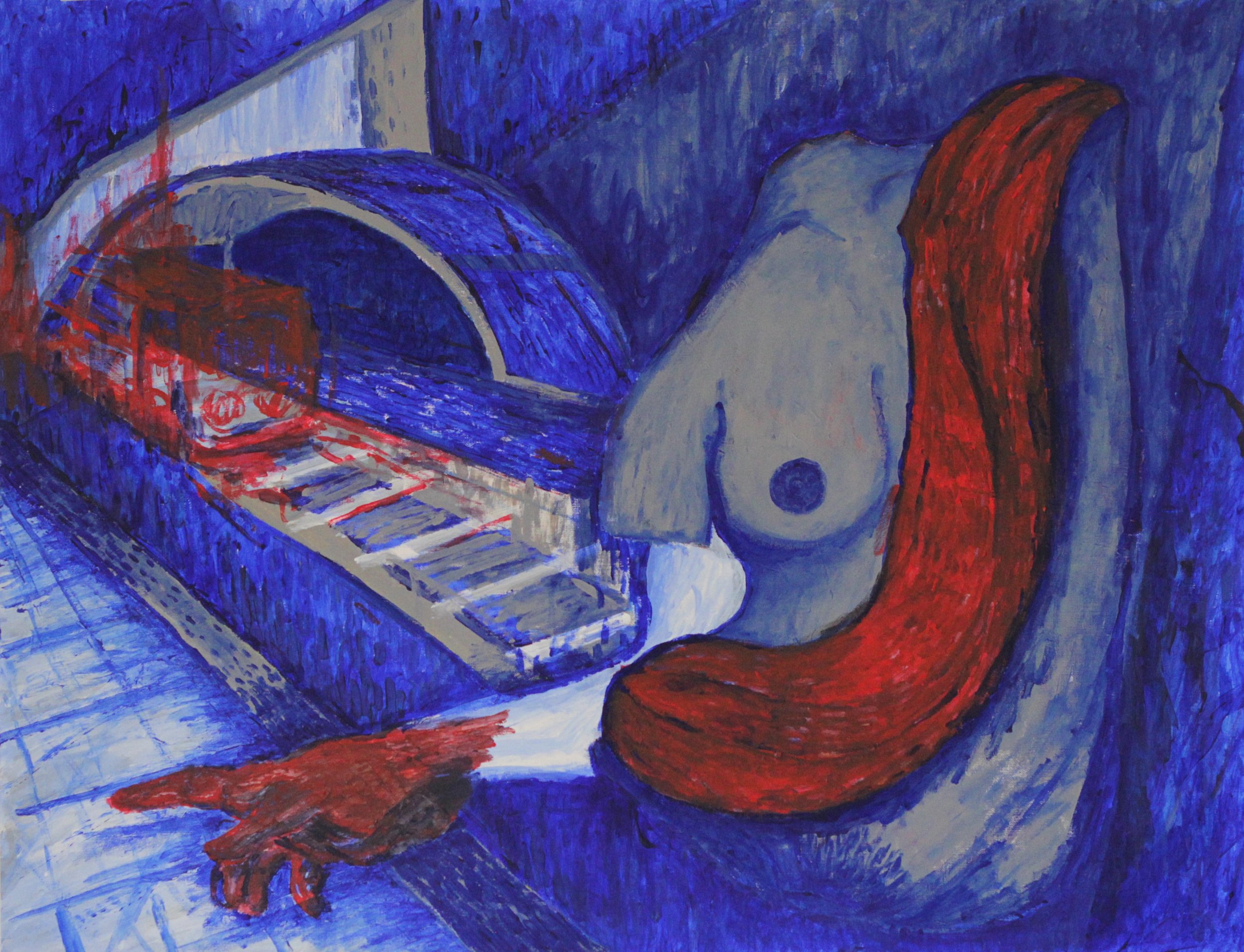
Last Stop; 2026, Acrylic and ink on oil paper, 50x65cm
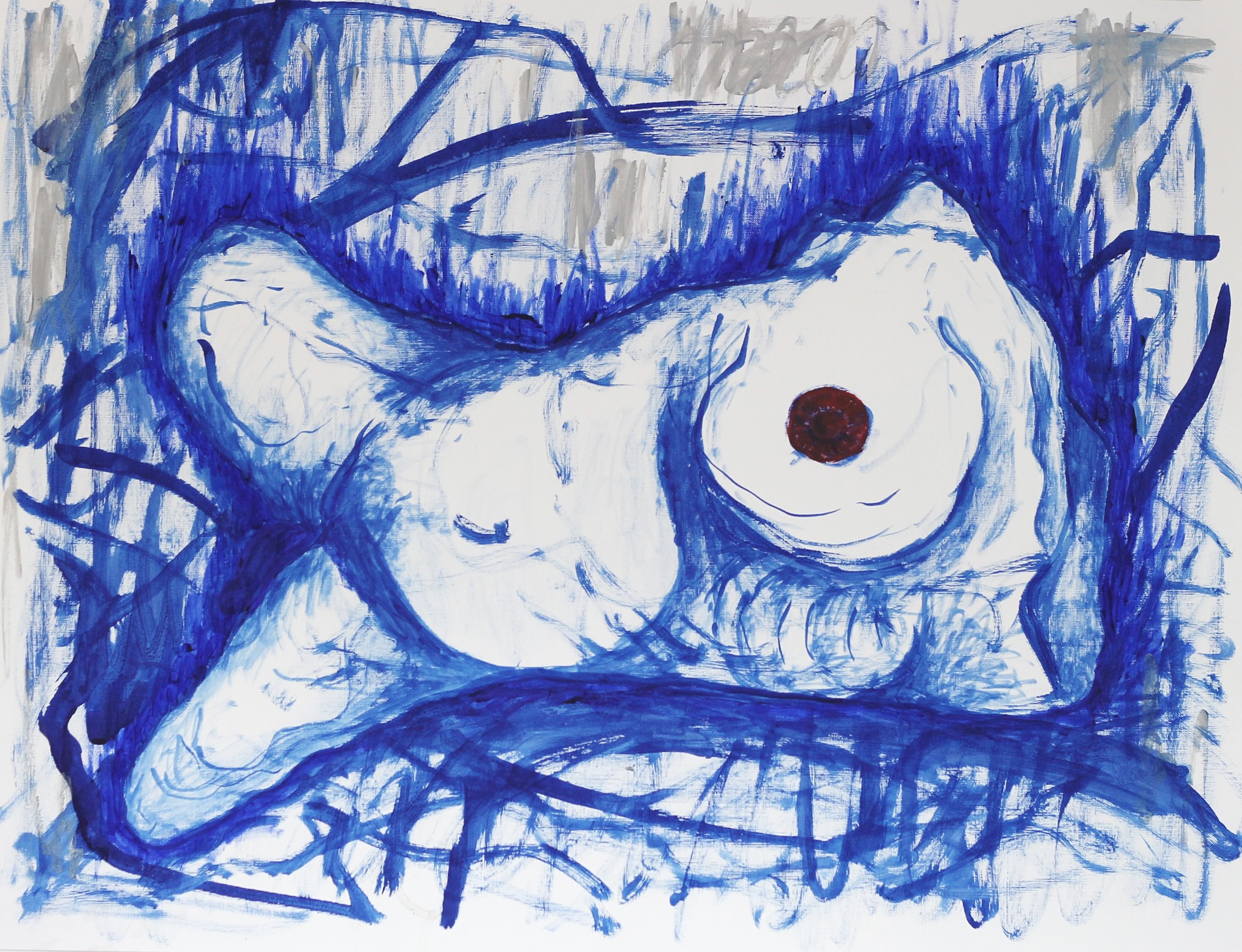
There's A Body In The Blue; 2026, Acrylic and ink on oil paper, 50x65cm
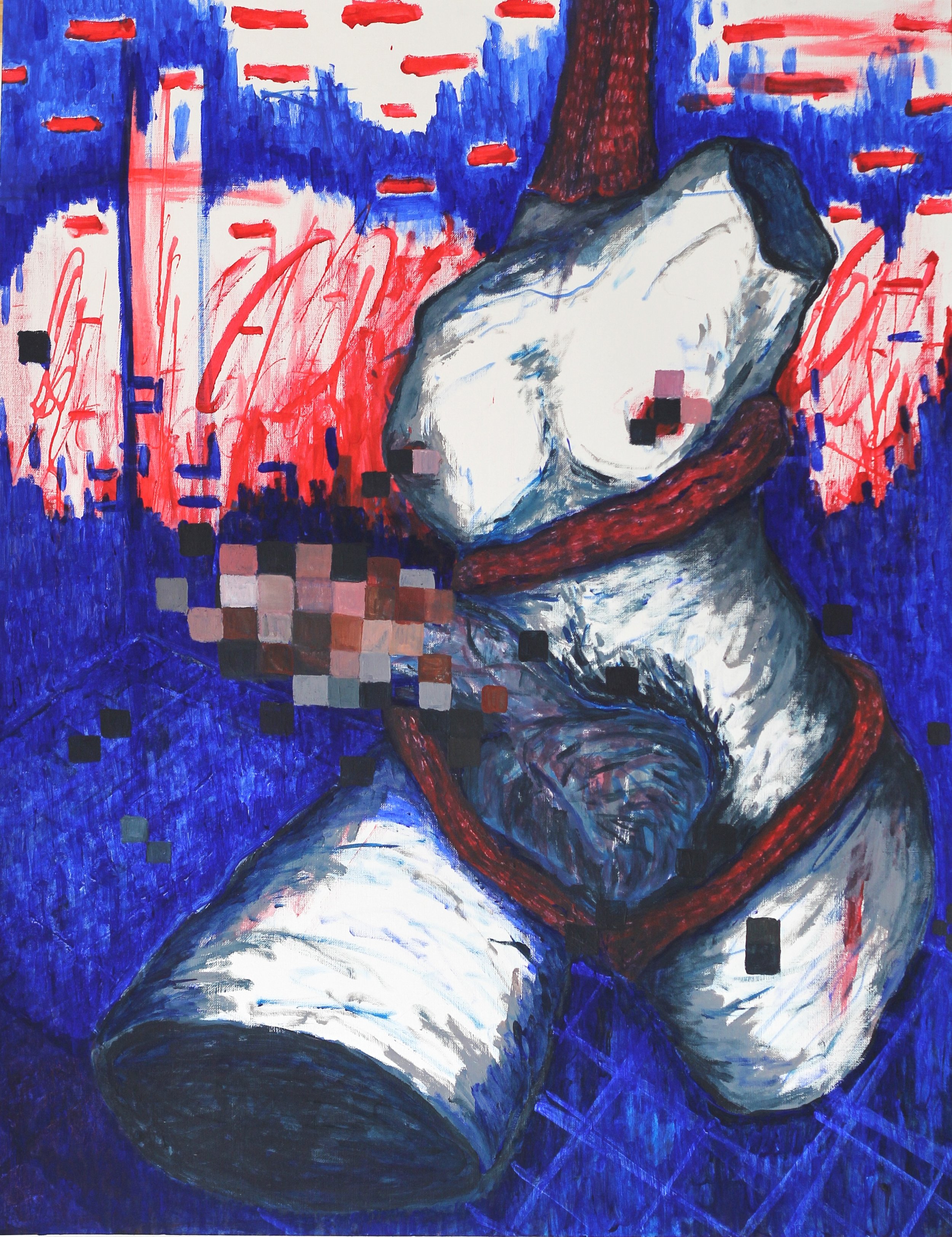
Rescue The Body; 2026, Acrylic and ink on oil paper, 65x50cm
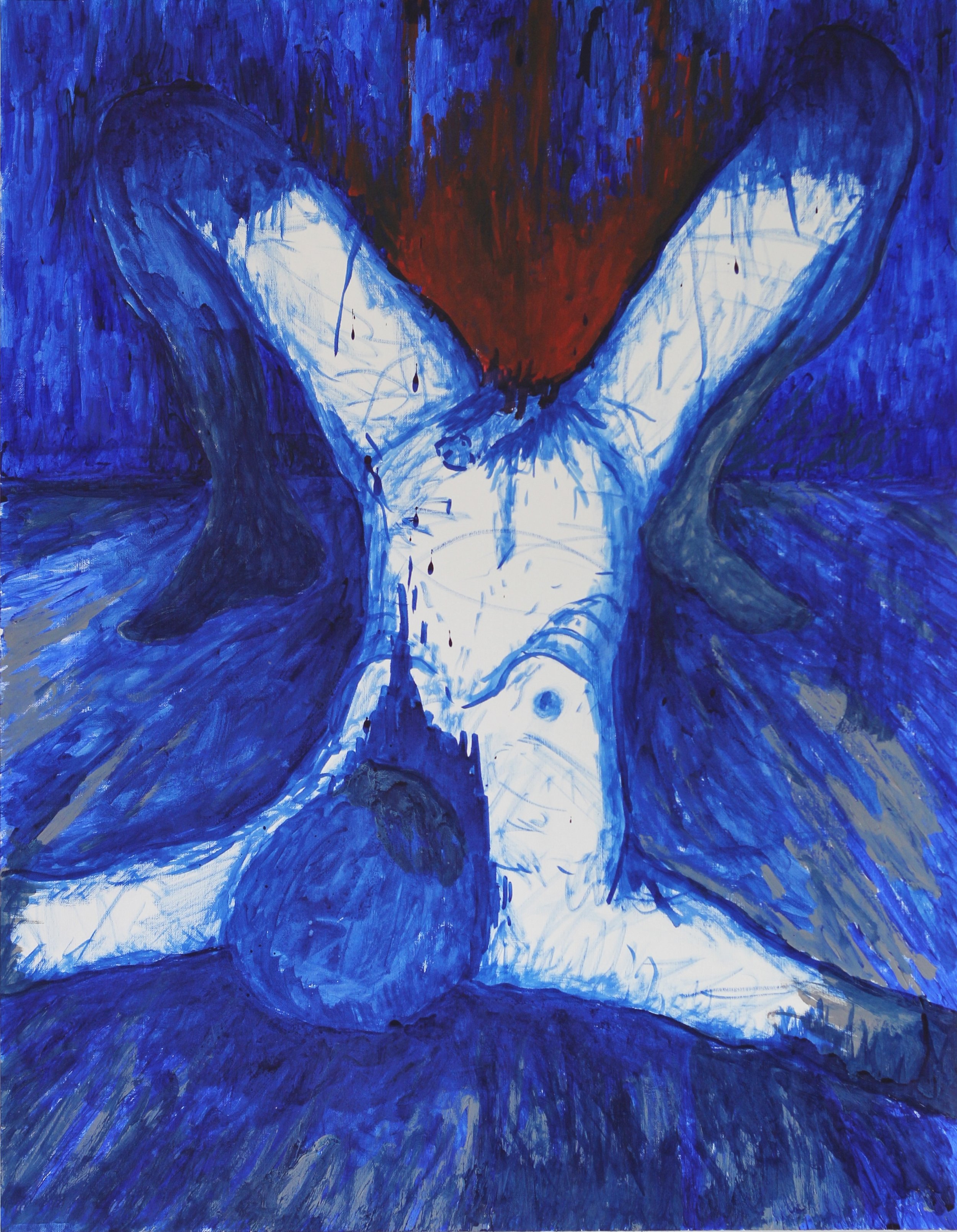
Seeking Comfort; 2026, Acrylic and ink on oil paper, 65x50cm
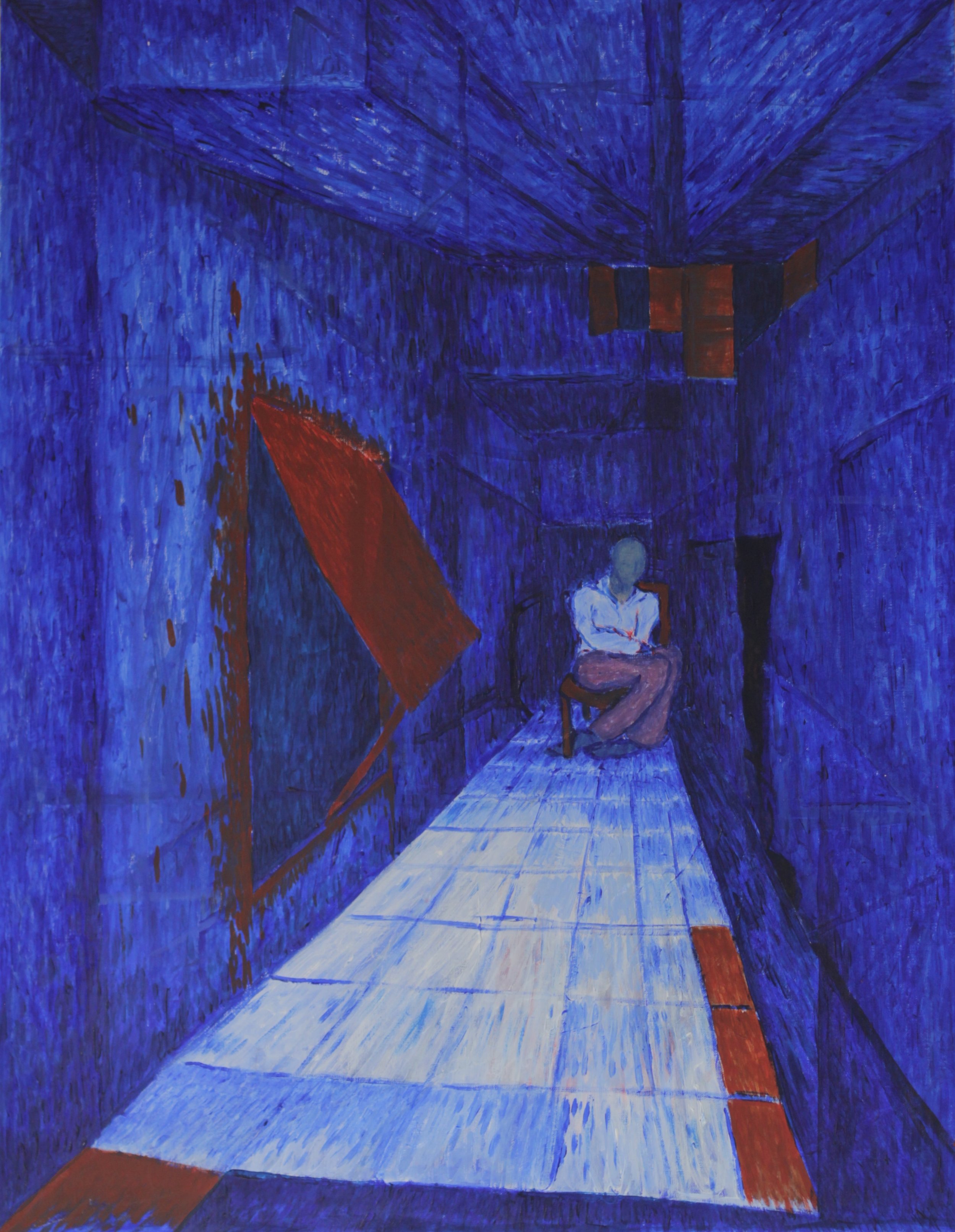
The Living Room Interview; 2026, Acrylic and ink on oil paper, 65x50cm
Dev Samol discusses their new series of work What Does The Body Do In The Blue? developed during the artist in residency program at House Conspiracy.
What first drew you to making art?
Art is consciousness in a physical form, and I am nothing without it.
I grew up with my mother who is a tailor and she inspired me and taught me to draw. I thought I wouldn’t want to make art for the rest of my life, but the only safe space where I can be myself is through drawing, painting and being creative.
You are a model and a performer as well as an artist, and in some instances, you appear in the work. How do these practices impact the way you create images?
Being an artist who works closely with the body has given me a clearer understanding of how bodies function as forms. These practises have enabled me to visualise and represent bodies as they react to different physical and psychological environments.
The Body Keeps The Score by Bessel Van Der Kolk and Bodyscape by Nicholas Mirzoeff have helped me understand how bodies reflect internal traumas externally.
The body is political, raising unlimited questions to explore.
Do you think it has helped in the way that you construct compositions?
Yes. When I look at the body now, I think of it as a landscape, a planet or the universe. The body is like the universe experiencing itself. That’s why I feel like every individual is a universe. Being nude is a pure form of your body, your real place, you don’t have to pretend to be anyone and can just be with your skin.
Yes. When I look at a body now, I see it as an inanimate object, landscape, planet or space. The body is like the universe experiencing itself. Each form is unique and natural and can be manipulated. Being nude is the body in its purest form, your only real home where you can be vulnerable and exposed.
Earlier on, more of your paintings were drawn from life, and some have been included in this show. A lot of the newer works stem from your imagination
I draw from life when the model is connected to the artwork and has shared similar experiences relating to the concept of the work. Particularly when the model has a unique point of view that inspires and has an impact on me.
When I create work from my imagination, I’m capturing images that appear during mental discomfort, reflecting past traumatising experiences. These intrusive images come to mind so clearly and strongly and can appear at any time. My only resolve is to draw it out, before time erases my hallucination.
How does the video and sound component inform your paintings? How does it add context?
The video work Meditation features a body crawling into a corner of the room trying to find peace of mind, safety and to stabilise emotions. It is reflecting on the personal experience of depersonalisation. Depersonalisation is common for a traumatised person to experience during traumatic events.
What does the blue mean for you?
The blue is a state of oblivion, the melancholy of trauma, when time is frozen, reality has shifted and becomes blurry. Blue is a vulnerable, sad, pure, vast and mysterious colour. It is strongly connected to our emotions and ingrained in our way of viewing the world.
What questions or realisations do you hope to bring to your audience as they stand before your work?
My intention for this body of work is to use visual art as a platform to spread awareness of mental struggles. It is an issue that is passed down through generations through lack of information, support and resources. The works draw from my own personal experiences as well as from others who have encountered mental illness. Open up, be vulnerable, brave, confident, and accept the reality that we’re facing.
Meg Stoios in conversation with Dev Samol